
Pioneers of Poker in India
Welcome India’s Official Poker Association
Poker Is Not Gambling.
It’s Skill, Strategy & Discipline.
The Indian Poker Association has governed, legitimized, and professionalized poker across India since 2012
- Recognised skill-based mind sport
- Transparent & professionally managed rooms
- Trusted by serious players nationwide
Governing Poker With Integrity, Skill & Discipline
Governing Poker With Integrity, Skill & Discipline
IPA YOUR WILD CARD
Founded nearly 14 years ago, IPA has played a key role in establishing poker in Bangalore—overcoming legal challenges, popularizing the game, and ensuring professional, transparent operations.Today, IPA runs live rooms in Bangalore, Ranchi, and NCR , with new rooms opening soon. Registered under the Karnataka Societies Act, 1960, IPA aspires to be for poker what the BCCI is for cricket. With the trust of players and a vision to develop a world champion, IPA now offers its members a 4-week Pokernomics course.
Pioneers of Poker in India.
Pioneers of Poker in India, driving skill-based play, integrity, and professional growth.
Sphere heading Poker revolution in India.
Leading India’s poker movement with skill, strategy, and trust.
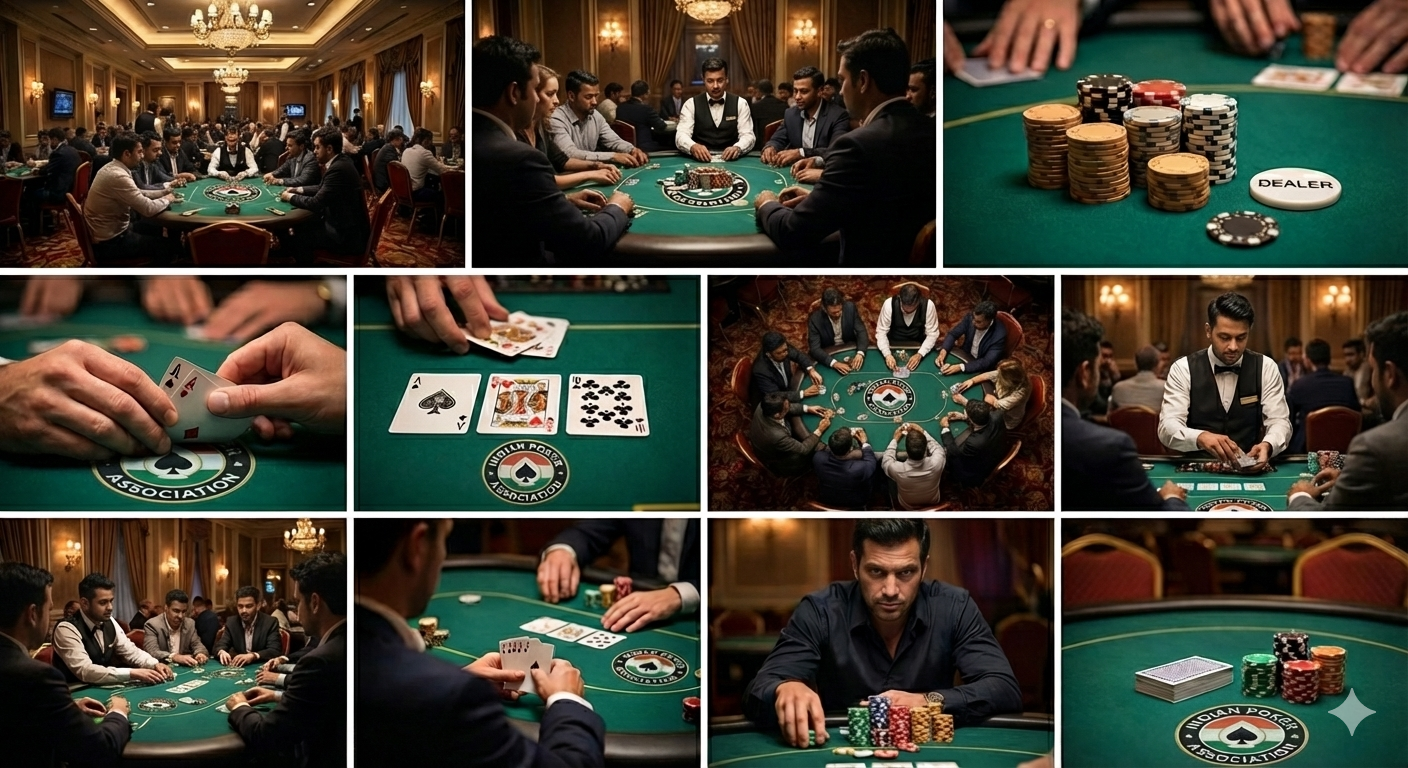
Transparent Dealing
Where trust meets the game: transparent dealing for all players.
Shaping Poker as a legitimate skill based mind sport in India
Bangalore - Ranchi - NCR
Guided by principles of fairness, discipline, and transparency.
Since 2012
The Institution Behind India’s Poker Movement
The Indian Poker Association was founded with a singular purpose — to bring structure, legitimacy, and discipline to poker in India. At a time when poker faced legal ambiguity and social misunderstanding, IPA stood firm, guided by transparency, fairness, and skill-first principles.
- For over a decades, the Indian Poker Association has championed legitimacy, discipline, and fair play—recognizing poker as a mind sport, not a game of chance.
- Registered under Karnataka Societies Act, 1960
- Transparent, professionally managed live rooms
- Trusted by serious players across India
For over two decades, the Indian Poker Association has stood for legitimacy, discipline, and fair play — governing poker as a mind sport, not a game of chance.
✔ Registered under Karnataka Societies Act, 1960
✔ Transparent, professionally managed live rooms
✔ Trusted by serious players across India

Governance & Fair Play,
produce locally
Rules enforced without bias or manipulation.
Mind Sport Philosoph
Poker treated as a game of intellect, not impulse.
Since 2004
The Institution Behind India’s Poker Movement
The Indian Poker Association was founded with a singular purpose — to bring structure, legitimacy, and discipline to poker in India. At a time when poker faced legal ambiguity and social misunderstanding, IPA stood firm, guided by transparency, fairness, and skill-first principles.
For over two decades, the Indian Poker Association has stood for legitimacy, discipline, and fair play — governing poker as a mind sport, not a game of chance.
✔ Registered under Karnataka Societies Act, 1960
✔ Transparent, professionally managed live rooms
✔ Trusted by serious players across India
Governance & Fair Play,
produce locally
Rules enforced without bias or manipulation.
Mind Sport Philosophy
Philosophy
Poker treated as a game of intellect, not impulse.
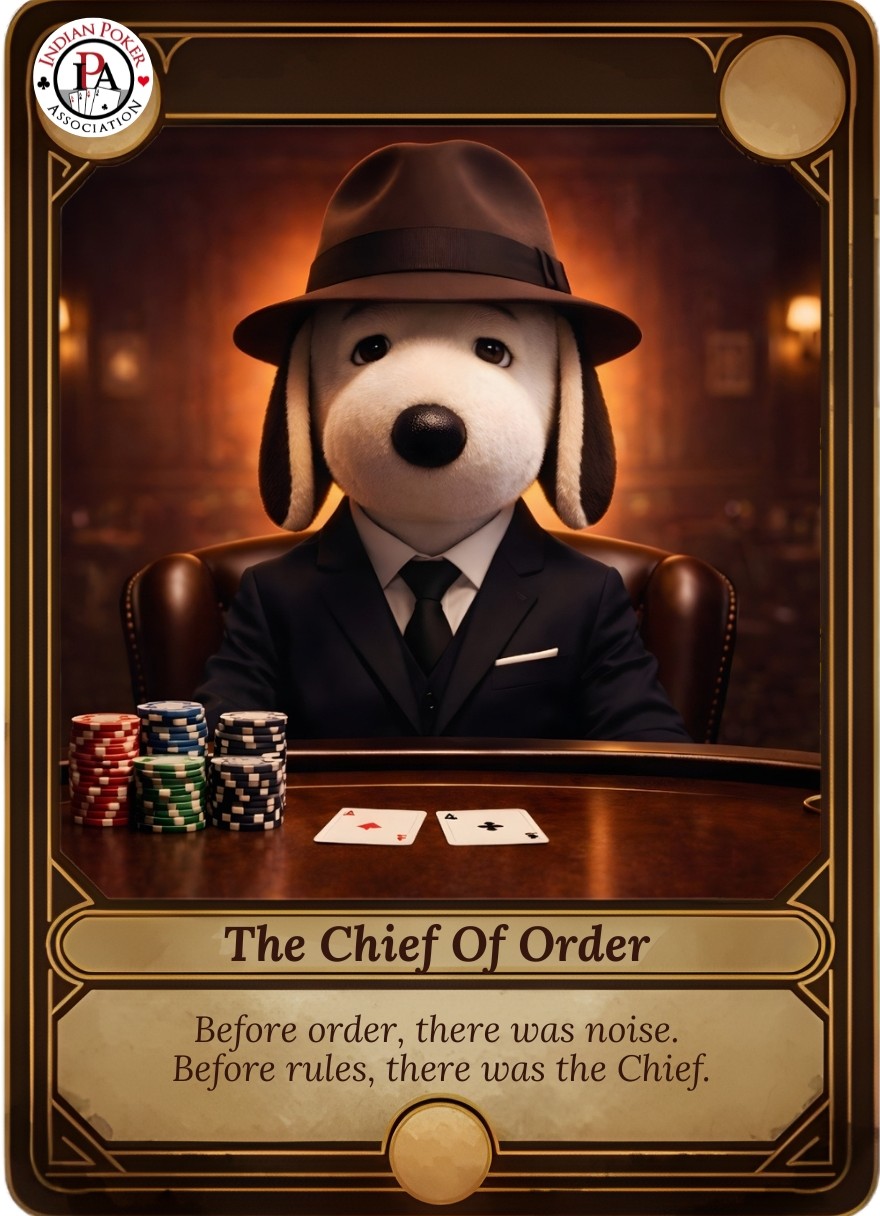
The Guardians of the Grand Table
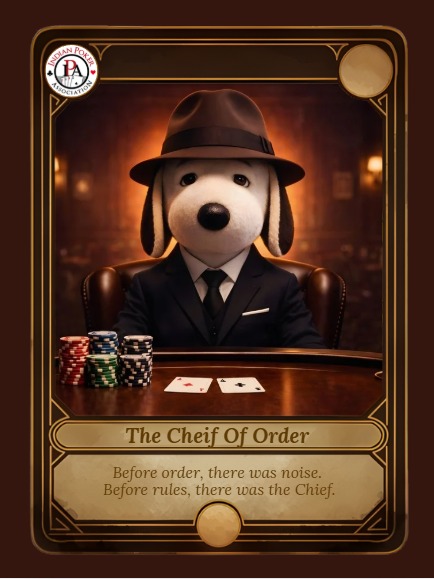
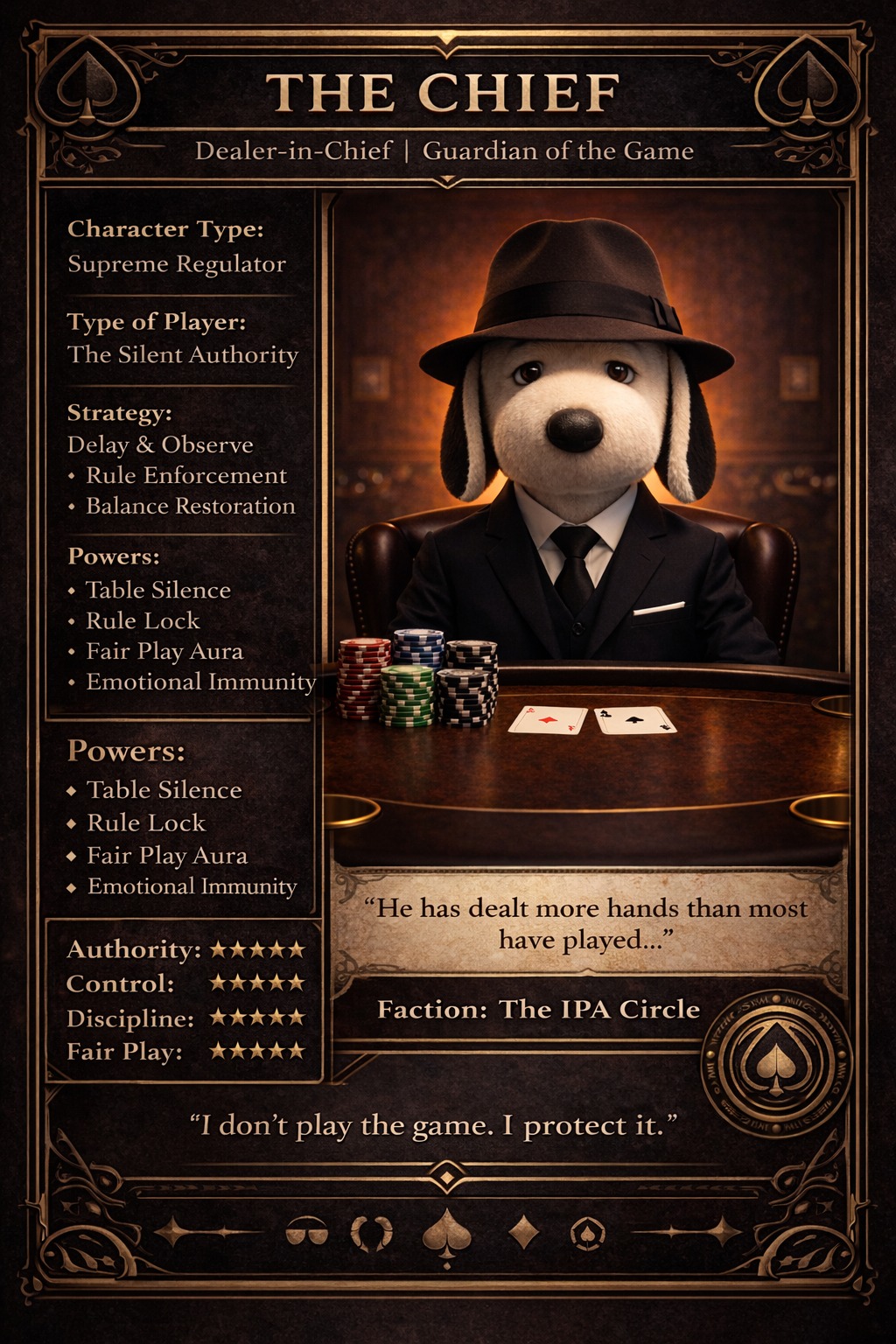
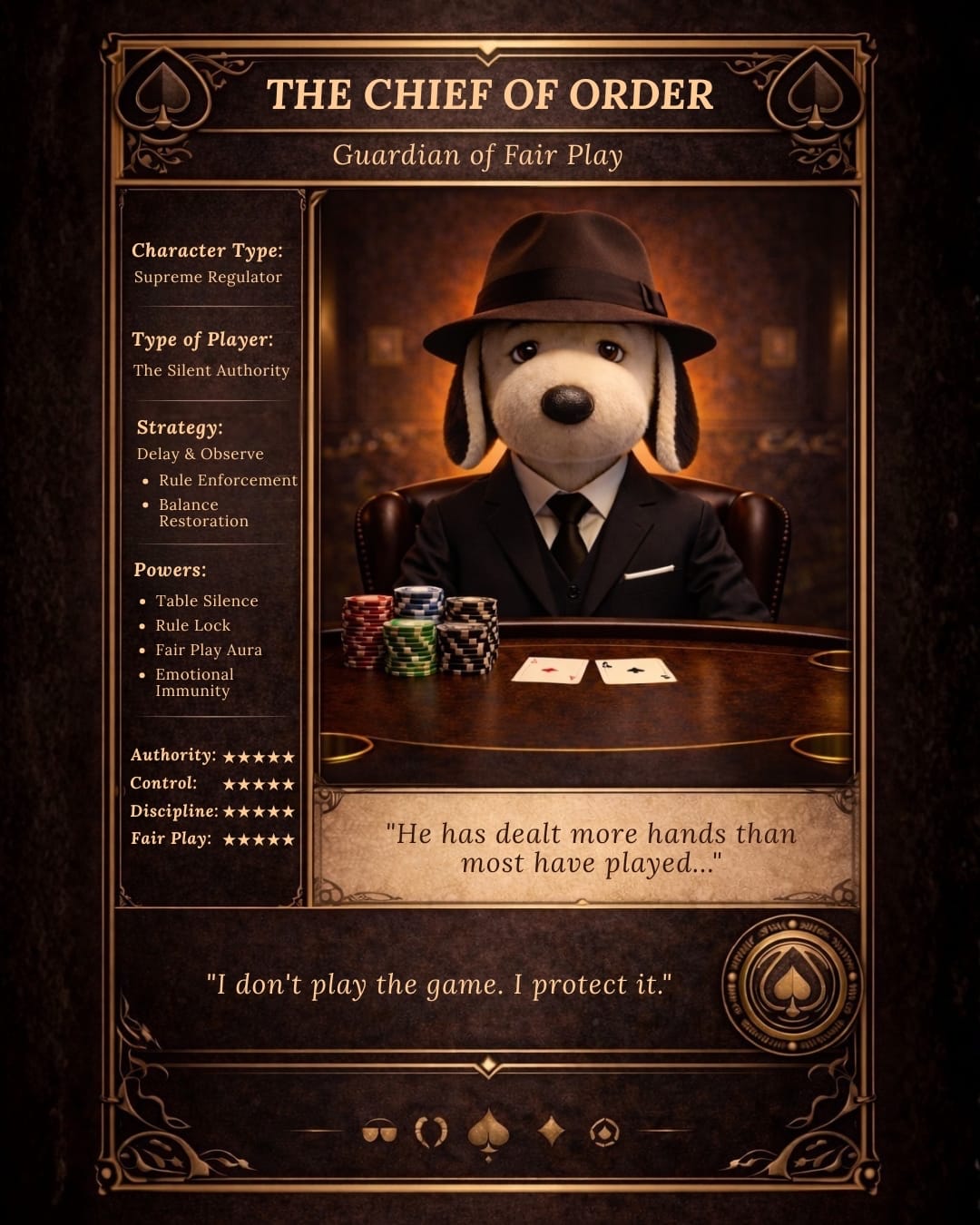
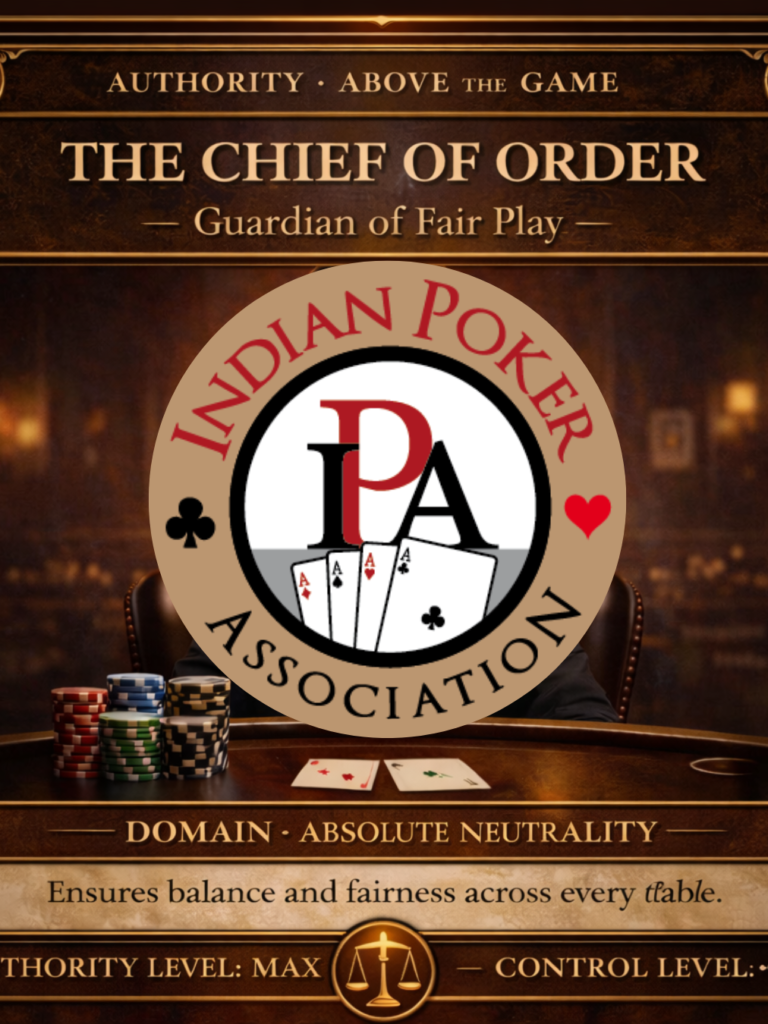
The Chief of Order presides over the table as the ultimate authority, ensuring every hand follows structure, rules, and fairness.
Before order, there was noise.
Before rules, there was chaos.
PURPOSE
Guardian of Fair Play His purpose is singular — to eliminate manipulation, intimidation, and imbalance so that skill alone decides outcomes. No bias. No exceptions.
IMPACT
Balance Restored When chaos enters the game, he slows the table, resets equilibrium, and restores control. The game survives because order does.
METHOD
Rule Before Ego Aggression, reputation, or dominance do not override process. The Chief enforces order through consistency, not emotion or reaction.
ROLE
He is not a participant. He is the regulator.
The Guardians of the Grand Table
The Chief of Order presides over the table as the ultimate authority, ensuring every hand follows structure, rules, and fairness.
ROLE
He is not a participant. He is the regulator.
PURPOSE
Guardian of Fair Play His purpose is singular — to eliminate manipulation, intimidation, and imbalance so that skill alone decides outcomes. No bias. No exceptions.
METHOD
Rule Before Ego Aggression, reputation, or dominance do not override process. The Chief enforces order through consistency, not emotion or reaction.
IMPACT
Balance Restored When chaos enters the game, he slows the table, resets equilibrium, and restores control. The game survives because order does.
Before order, there was noise. Before rules, there was chaos.
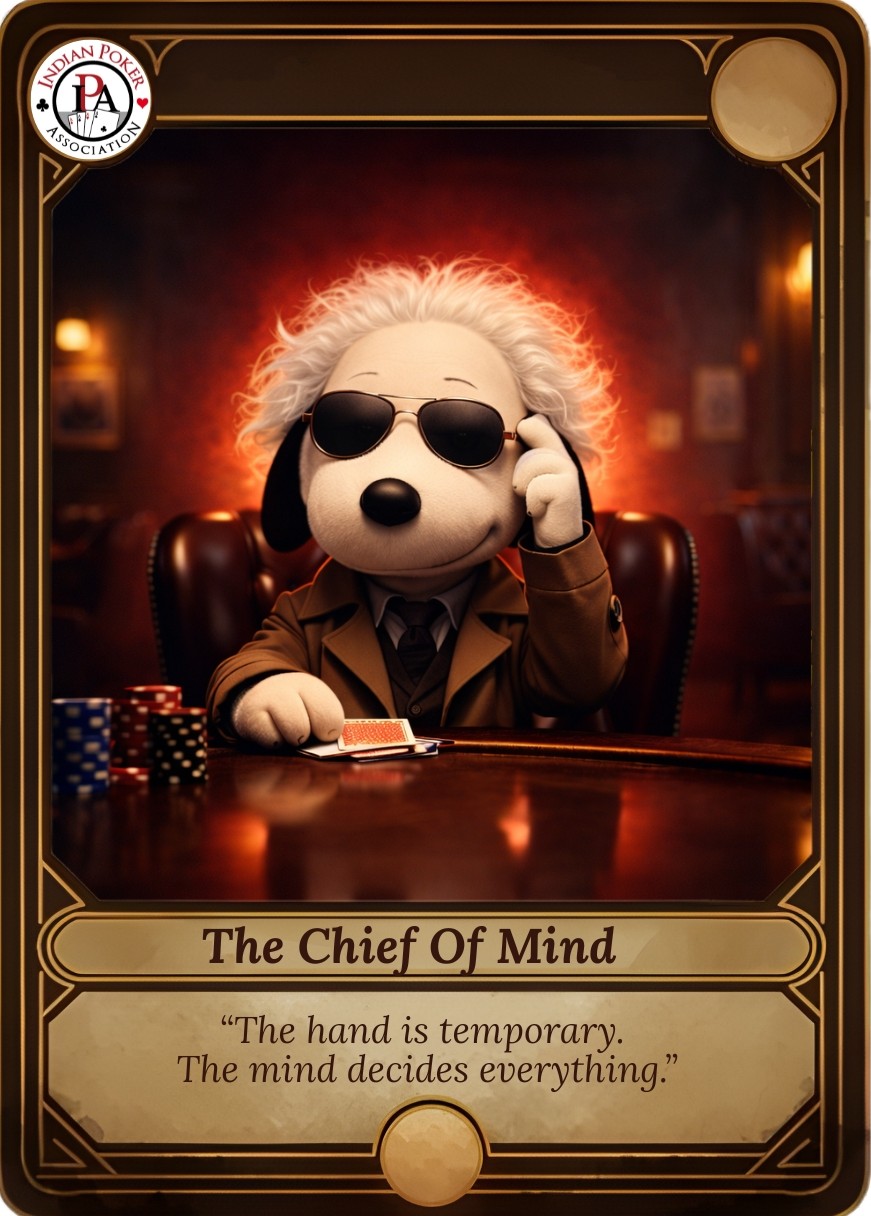
The Guardians of the Grand Table
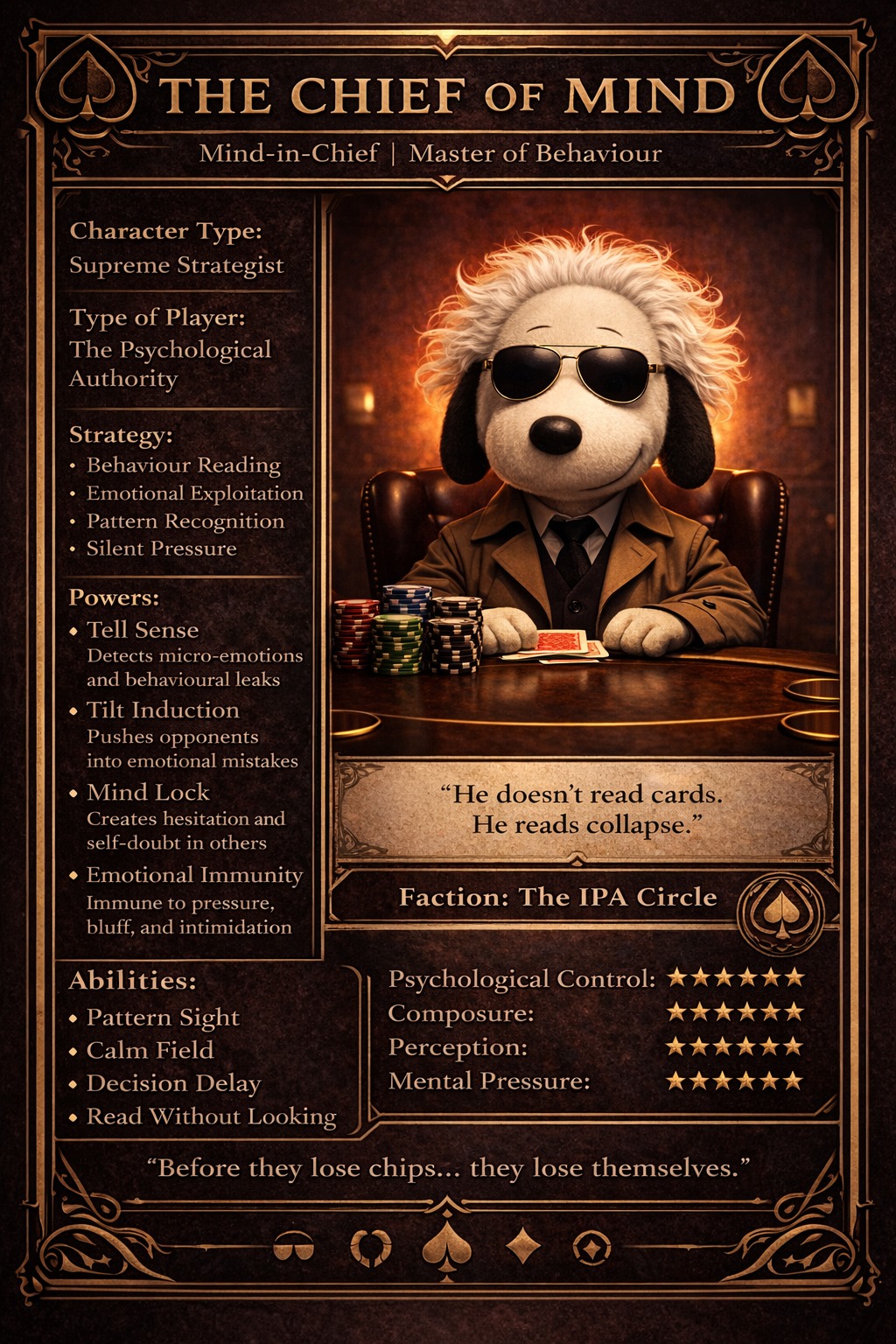
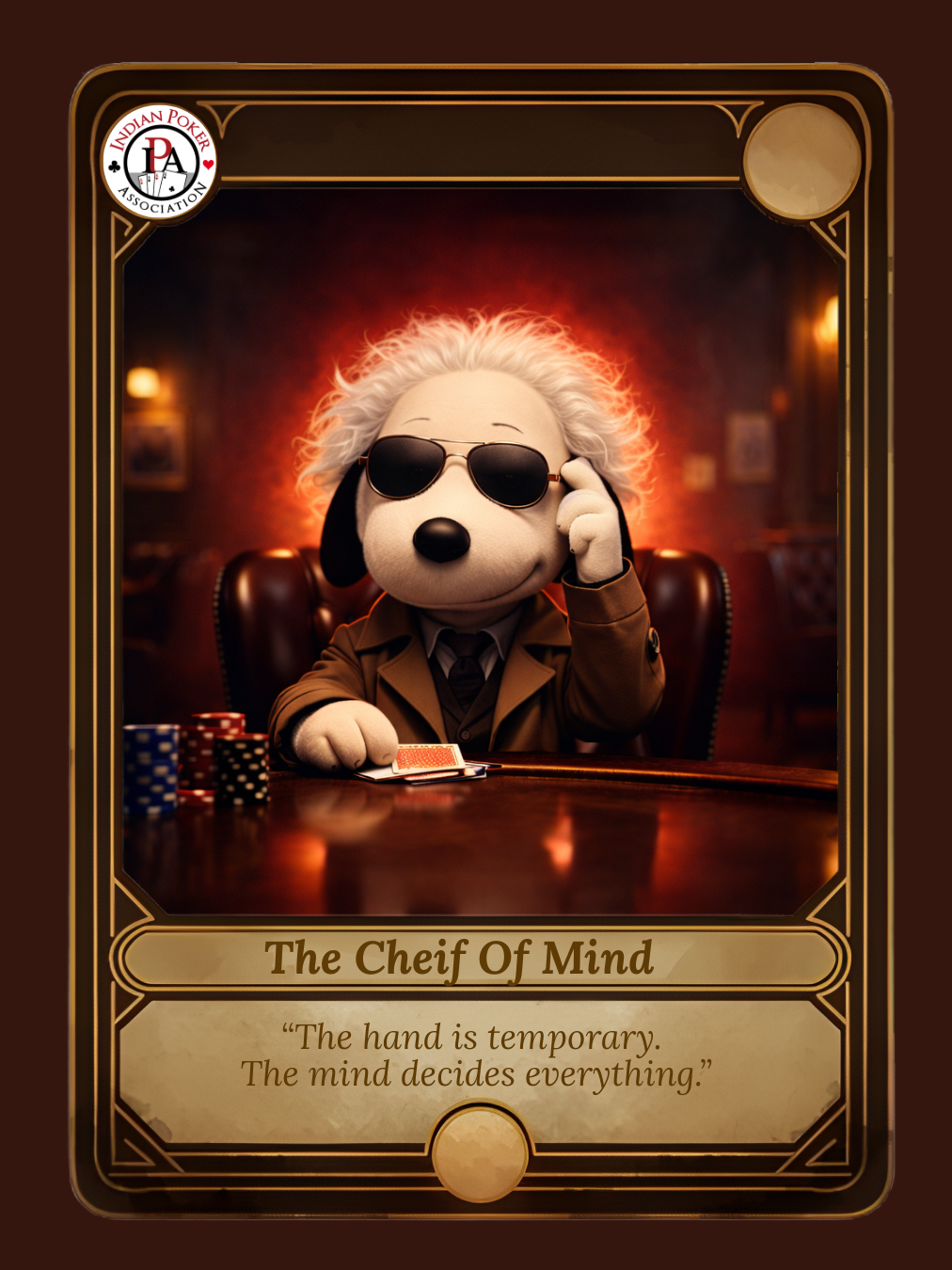
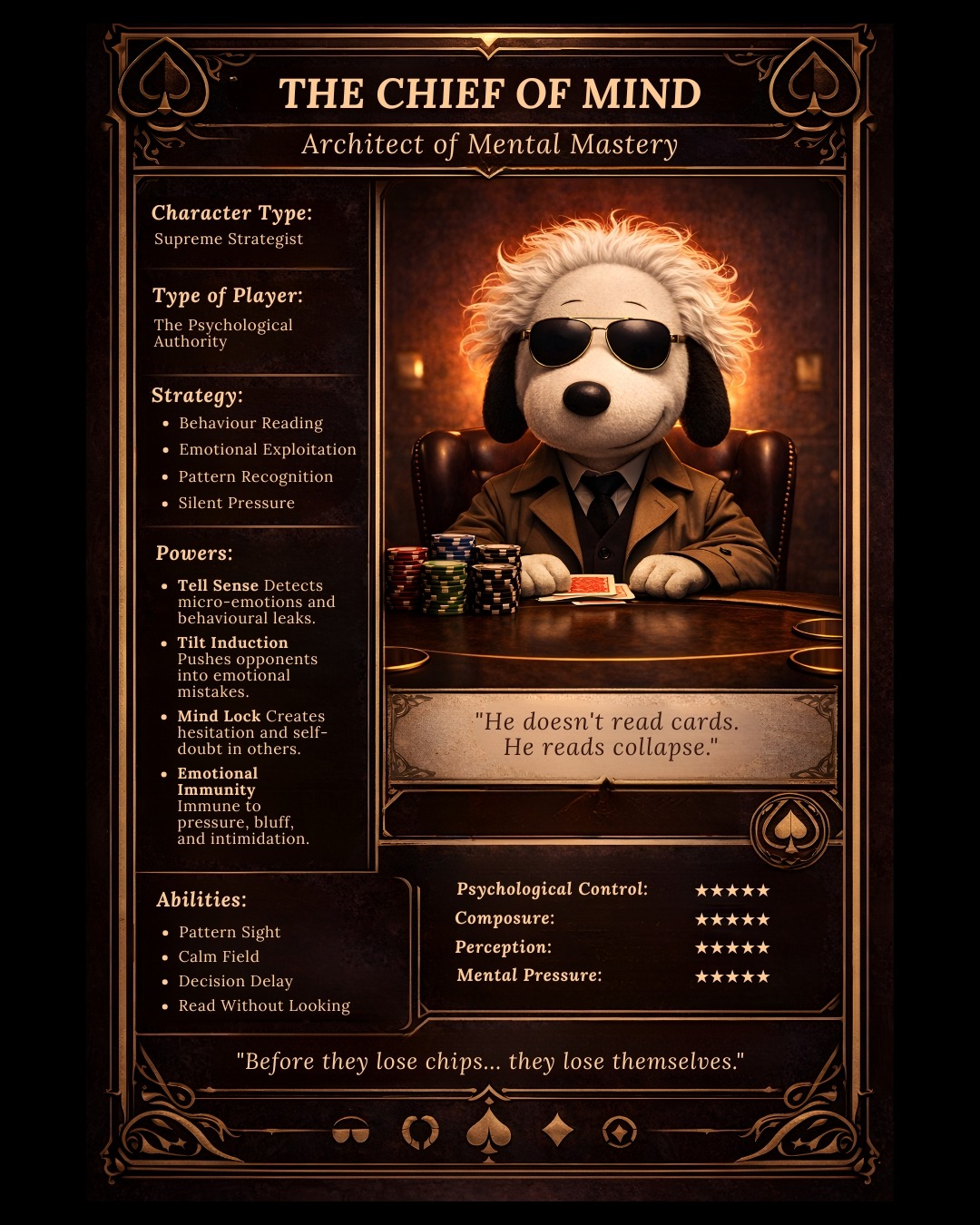
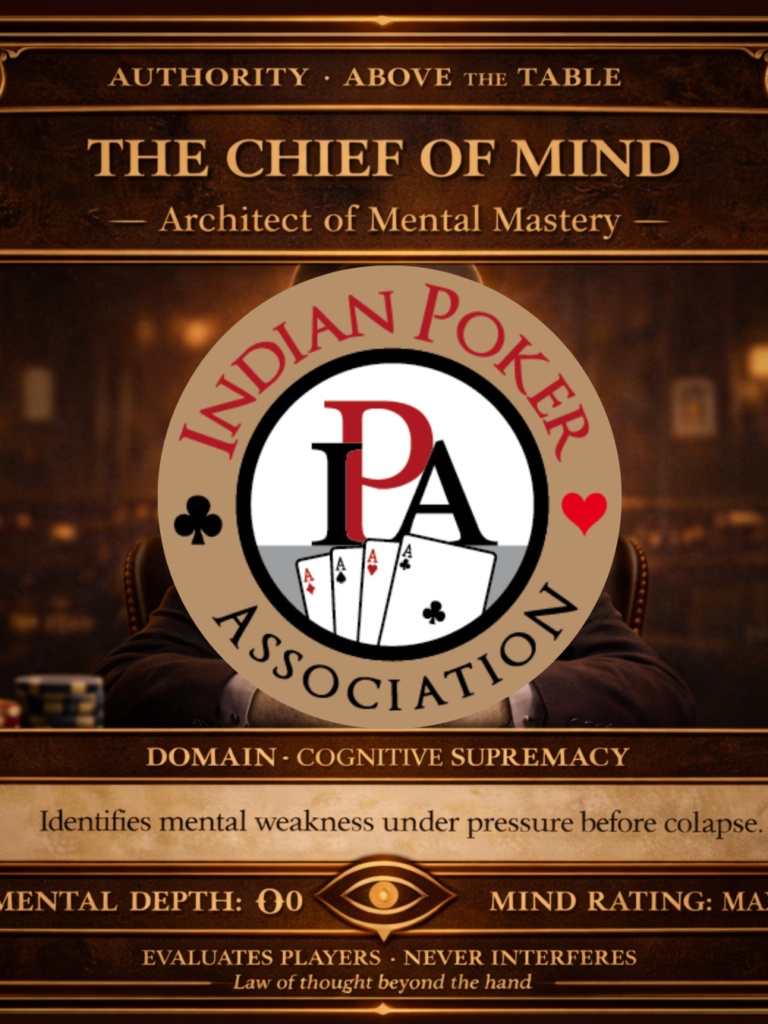
The Chief of Mind exists to read intent, exploit hesitation, and control emotional momentum at the table.
“He doesn’t read cards.
He reads collapse.”
PURPOSE
Master of Behaviour His purpose is to expose patterns, emotional leaks, and cognitive weaknesses that opponents fail to notice. Fear, ego, and overconfidence are his terrain.
IMPACT
Decisions Break First Before chips are lost, minds are. By the time opponents realise the trap, their choices have already been shaped.
METHOD
Read, Pressure, Collapse Through observation and timing, he applies psychological pressure until opponents make decisions against their own interest. No confrontation. Only silent influence.
ROLE
Mind-in-Chief The Chief of Mind is the supreme psychological authority at the table. He does not control the rules — he controls how players react to them.
The Guardians of the Grand Table
The Chief of Mind exists to read intent, exploit hesitation, and control emotional momentum at the table.
“He doesn’t read cards.
He reads collapse.”
The Guardians of the Grand Table
The Chief of Mind exists to read intent, exploit hesitation, and control emotional momentum at the table.
ROLE
Mind-in-Chief The Chief of Mind is the supreme psychological authority at the table. He does not control the rules — he controls how players react to them.
PURPOSE
Master of Behaviour His purpose is to expose patterns, emotional leaks, and cognitive weaknesses that opponents fail to notice. Fear, ego, and overconfidence are his terrain.
METHOD
Read, Pressure, Collapse Through observation and timing, he applies psychological pressure until opponents make decisions against their own interest. No confrontation. Only silent influence.
IMPACT
Decisions Break First Before chips are lost, minds are. By the time opponents realise the trap, their choices have already been shaped.
“He doesn’t read cards. He reads collapse.”
From regulation to education — IPA exists to elevate poker, not exploit it.
How does Indian Poker Association work?
-
1
Establish the Framework
IPA defines the rules, formats, and standards that govern professional poker. From tournament structures to table conduct, every game operates within a clear, transparent framework that prioritises skill over chance. -
2
Govern & Train
IPA oversees live rooms, certifies processes, and educates players. Through structured learning, behavioural discipline, and mathematical understanding, players are trained to compete responsibly and professionally. -
3
Build the Ecosystem
IPA connects players, venues, and communities into a trusted network. By organising events, supporting live rooms, and fostering responsible growth, IPA strengthens poker as a legitimate mind sport in India.



Pokernomics
Understanding poker through economics, decision value, and long-term thinking.
Poker’s economic importance dates back to the mid-18th century in pre–Gold Rush North-Western America, an otherwise underdeveloped region. Wealth creation through poker was seen as disruptive and transformative. Players used self-made clay tokens—early poker chips—as a form of currency. Bets were placed only after seeing one’s hand, allowing informed, analytical decisions, which is why poker was not viewed as gambling. Winners could defer payments with interest, laying the foundation for early credit systems. They also accepted goods, services, or labor in exchange, aiding business expansion. Notably, early futures markets in Chicago were driven by networks of poker players.
Pokerathematic
Probability, odds, and mathematical edges that separate luck from skill.
It’s possible to win at poker without understanding its mathematics, but becoming a consistent winner is nearly impossible without it. Many players rely on “tells” or intuition, but ignoring math means throwing money away. Concepts like pot odds, probability, and expected value form the foundation of every winning strategy. Poker math isn’t as hard as it seems—if you can outthink opponents, you can handle the numbers. Even if math wasn’t your strong subject in school, you can still grasp it. Winning decisions aren’t based on “feel,” but on calculated edges that maximize your chances. Understanding the numbers unlocks your full potential at the table.
Pokernomics
Understanding poker through economics, decision value, and long-term thinking.
Ever wonder why some days you play your best and other days you struggle? Poker performance often mirrors psychological highs and lows. When mental toughness is low, mistakes increase; when it’s high, strong play becomes almost automatic. Developing mental toughness—the ability to perform your best under any circumstance—is key to consistent success, both at the table and in life. Seasoned players know poker is a long-term game, and managing the ups and downs is essential. Historically, poker also shaped economic and social systems: players used clay chips as currency, made informed bets, and exchanged winnings for goods, services, or labor. Early poker networks even helped drive futures markets and expand business connections across regions.
Pokernomics
Understanding poker through economics, decision value, and long-term thinking.
The economic importance of poker dates back to mid 18th century, when certain individuals, iconic in today's world in the North Western American states, predominantly a backward region, before the gold rush, were creating wealth which was disruptive. The game Poker was attributed towards this phenomenon. In those times individuals used to make their own currency out of clay (round shaped called chips in today's parlance) and affix a insignia and used them to play the game. Though large bets were placed, The game Poker was not construed as gambling as the player never places a bet before he sees his hand and has the option of dropping without paying any money or materiel. The player only placed the bet after making an informed decision and basis his analytical interpretation proceeded to further the game. The winner had chips of others and he could either collect the payment on a deferred date for a small interest (birth of credit system) or take any materiel of use to him or get the person to work for him. If the loser was a lawyer, he would use his services (business expansion) and so on. In-fact futures markets, first started in Chicago comprised of poker players. The game also increased their network across regions which benefited their business and services..
Pokerathematic
Probability, odds, and mathematical edges that separate luck from skill.
It's possible to win in poker without learning the mathematics of the game. But, it's very difficult to become a consistent winner without learning Pokerathematic and you are limiting your potential. Majority of players are not very familiar with the mathematics of poker, and they're wondering if you can get by without learning the math of the game. You might like to think that poker is all about tells, reads and "feel", but you're only fooling yourself. It doesn't matter what kind of sixth sense you claim to have, if you don't know about pot odds you are throwing money down the drain. Is poker mathematics difficult? Not nearly as difficult as you probably think it is. It's certainly not so difficult that you need to convince yourself that you'll never be able to get your head around it. If you think you're intelligent enough to outwit your opponents, you have more than enough brain power to work with the numbers. And no, just because math wasn't your strongest subject at school it doesn't mean you're not going to be able to understand it all. Mathematics is the foundation of every single tip and strategy involved with playing poker. Probability and odds control the edges that increase your win rate. You don't call with a drawing hand because you “have a good feeling", you call because you have good odds.
Pokernomics
Understanding poker through economics, decision value, and long-term thinking.
Have you ever wondered why you are successful one day and no so the next? Many people feel like they are on a performance roller coaster where one minute they are on top of their game and the next on the bottom. We are beginning to amass evidence that ups and downs in poker performance are associated with psychological ups and downs. When mental toughness is low, you are more likely to play poorly. When mental toughness is high, playing well is almost certain. Your goal as a player is to create a mentally tough mindset that helps you to perform more consistently no matter what challenges you face. Every seasoned poker player knows that there is a ton of variance in the game and that poker is really a game of the long haul. Being mentally able to deal with the ups and downs of the game is one of the hallmarks of a great player. All great players exhibit something called mental toughness. Simply stated, mental toughness is the ability to play your best in any situation. Mental toughness becomes especially important when you are facing problems, obstacles, adversity, or failure — either in your personal life or at the table. Having mental toughness allows you to play more consistently, regardless of challenges that might arise at the table or elsewhere. The game Poker was attributed towards this phenomenon. In those times individuals used to make their own currency out of clay (round shaped called chips in today's parlance) and affix a insignia and used them to play the game. Though large bets were placed, The game Poker was not construed as gambling as the player never places a bet before he sees his hand and has the option of dropping without paying any money or materiel. The player only placed the bet after making an informed decision and basis his analytical interpretation proceeded to further the game. The winner had chips of others and he could either collect the payment on a deferred date for a small interest (birth of credit system) or take any materiel of use to him or get the person to work for him. If the loser was a lawyer, he would use his services (business expansion) and so on. In-fact futures markets, first started in Chicago comprised of poker players. The game also increased their network across regions which benefited their business and services..
Our features
See what our customers say
4.82/5

-
Marvin McKinney
PrintSpace Is easy and really cool
“A superior method to print. Inquire as to whether you can utilize what you’ve made in your portfolio. More than ink… Solutions. ” -
Jane Cooper
T-shirt printing made easy.
“Great quality products - Flags, programs for exceptional capacities, birthday, and occasion welcome are largely still mainstream on paper.” -
Darrell Steward
I had a great experience with PrintSpace!
“A superior method to print. Inquire as to whether you can utilize what you’ve made in your portfolio. More than ink… Solutions. ” -
Jane Cooper
T-shirt printing made easy.
“Great quality products - Flags, programs for exceptional capacities, birthday, and occasion welcome are largely still mainstream on paper.”
More to discover
You’ve got the ideas, we’ve got the tools
On the gram
@haru_printspace


